Audubon's Birds of America: The Most Ambitious Book Ever Printed
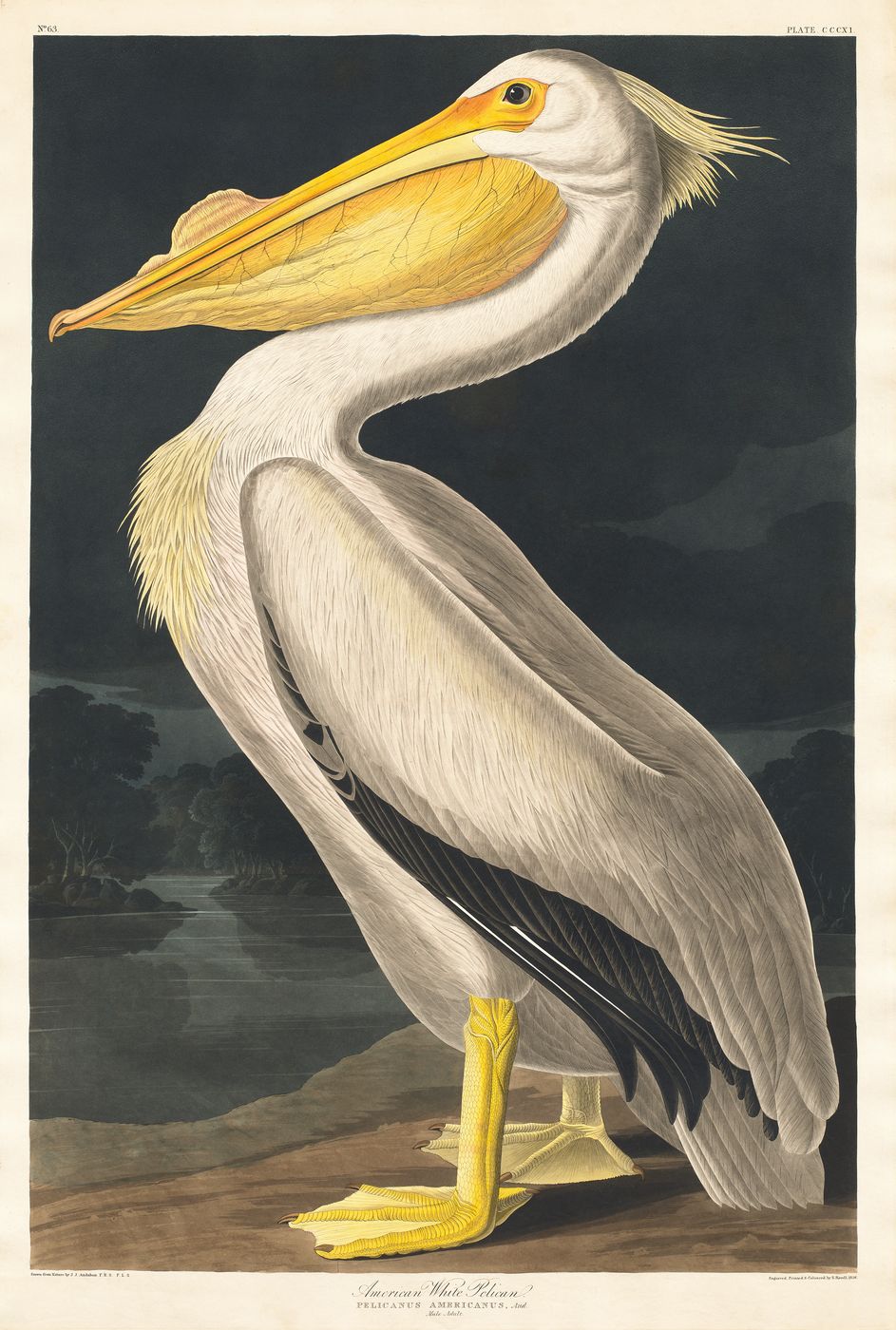
John James Audubon (1785–1851) set himself an impossible goal: to paint every bird in North America, at life size, in its natural attitude. The result, The Birds of America (1827–1838), is still regarded as the most spectacular illustrated book ever produced — and one of the most valuable.
Life-size, or nothing
Audubon refused to shrink his subjects. To fit a flamingo or a whooping crane onto the page at full scale, he had the book printed on "double elephant folio" sheets nearly a metre tall. The largest birds are shown bending and stooping to stay within the frame — a compositional problem he turned into drama. No book before or since has committed so completely to showing nature at its true dimensions.
The frontier artist the establishment doubted
Largely self-taught, Audubon roamed the American wilderness with a gun and a portfolio, observing behaviour that studio naturalists never saw. Rejected by the scientific establishment in Philadelphia, he found his engraver and his audience in Britain, where Robert Havell Jr. translated his watercolours into 435 hand-coloured aquatint plates. Audubon funded the enormous project by subscription, travelling constantly to keep patrons on board.
Why the plates still stop us
What sets Audubon apart from earlier bird artists is movement. His birds hunt, quarrel, feed their young and take flight; they are characters, not specimens. That theatricality — combined with the sheer scale and the crispness of the aquatint line — is why a single Audubon plate can anchor an entire room. Reproduced at archival quality, they bring a naturalist's obsession and an artist's eye to any wall.